What Can You Buy With EBT in 2026? SNAP Eligible Foods Guide
SNAP EBT can pay for most food your household takes home to eat or prepare. That generally includes fruits and vegetables, meat, poultry, fish, dairy products, breads, cereals, frozen foods, many snacks and non-alcoholic drinks. SNAP can even pay for seeds and plants that produce food for the household to eat.
But being sold inside a grocery store does not automatically make an item eligible for SNAP.
Under the standard federal rules, alcohol, tobacco, vitamins, medicines, dietary supplements, pet food, ordinary household supplies and food that is hot at the point of sale are excluded. Online delivery, service and convenience fees also require another payment method.
There is another important change in 2026: SNAP shopping rules are no longer identical in every state. Several states now operate USDA-approved food-restriction demonstrations, while other approved states have future implementation dates. Five state approvals were vacated by a federal court in June 2026 and may not proceed under the current order.
By FoodStampsApply.com Editorial
Last verified: August 20, 2026
Quick Answer
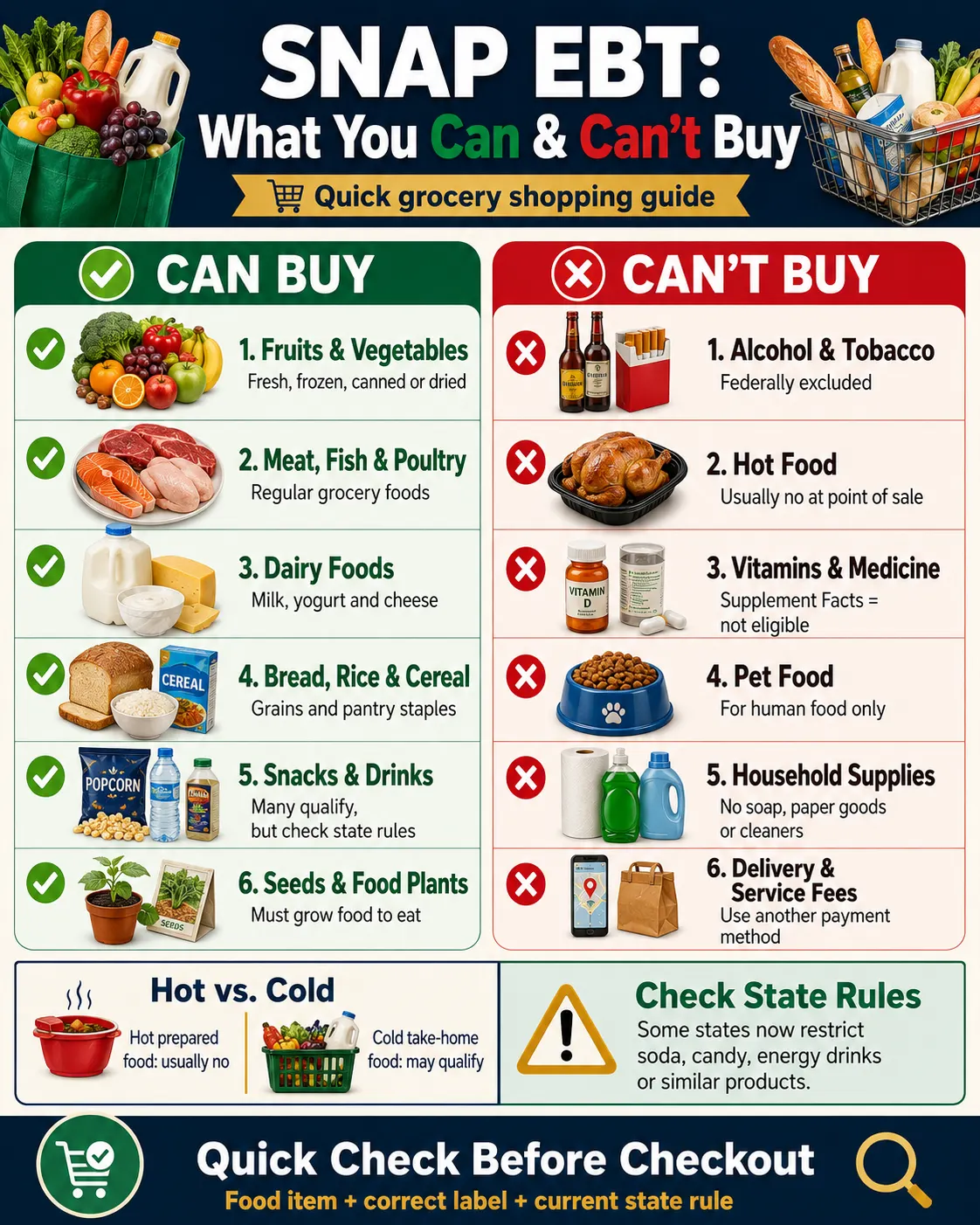
SNAP EBT generally pays for food intended for household consumption, including produce, meat, fish, dairy, breads, cereals, frozen food, many snacks and non-alcoholic drinks, baby food and formula, and seeds or plants that grow food. SNAP generally cannot pay for alcohol, tobacco, cannabis or CBD products, vitamins, medicines, supplements, pet food, nonfood household items, or food that is hot at the point of sale. State food-restriction waivers can also change whether certain soda, candy, energy drinks or other foods qualify where you live.
Independent information: FoodStampsApply.com is an independent SNAP information publisher. We do not operate EBT accounts, approve purchases, determine SNAP eligibility, or represent USDA or a state agency. Your state’s rules and the retailer’s properly coded checkout system determine whether a specific purchase is charged to SNAP.
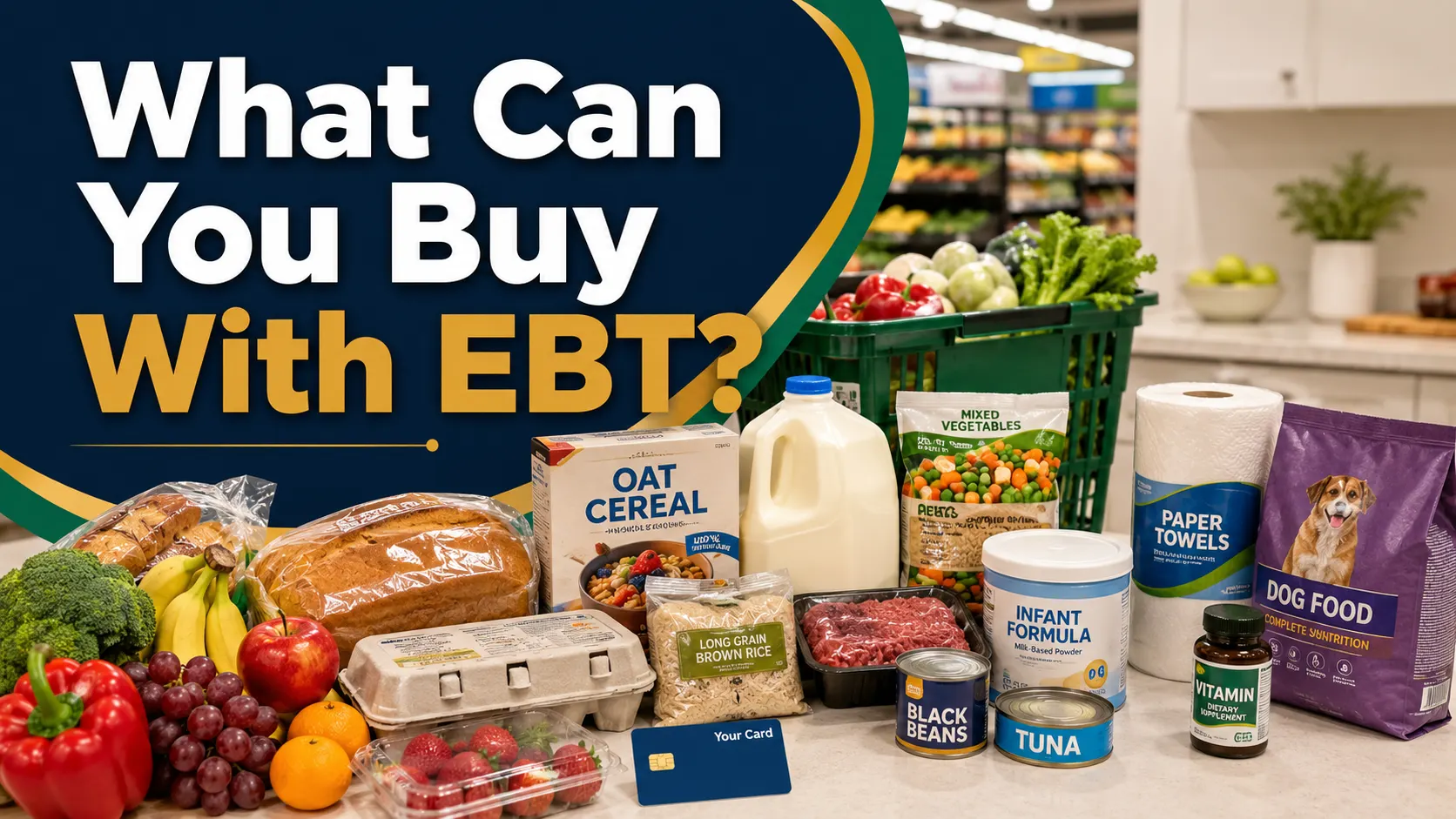
What Can You Buy With SNAP EBT?
| Item | SNAP EBT? | What to Know |
|---|---|---|
| Fruits and vegetables | Yes | Fresh, frozen, canned and dried foods can generally qualify |
| Meat, poultry and fish | Yes | Hot prepared versions are generally excluded under regular rules |
| Milk, cheese and dairy foods | Yes | Ordinary food products generally qualify |
| Bread, rice, pasta and cereal | Yes | Standard grocery foods generally qualify |
| Frozen foods | Usually | The product itself still must meet SNAP food rules |
| Snacks and non-alcoholic drinks | Often | The federal baseline allows many of these, but current state waivers can restrict some products |
| Cold take-home prepared food | May qualify | A product sold cold for household consumption can be treated differently from hot food |
| Baby food and infant formula | Yes | Food intended for human consumption generally qualifies |
| Seeds and food-producing plants | Yes | The seeds or plants must produce food for the household to eat |
Items SNAP Usually Cannot Pay For
| Item | SNAP EBT? | What to Know |
|---|---|---|
| Hot food at the point of sale | Usually no | Restaurant Meals Program and temporary disaster exceptions can apply |
| Vitamins and supplements | No | Products carrying a Supplement Facts label are not SNAP eligible |
| Prescription and OTC medicine | No | Medicines are federally excluded |
| Pet food | No | SNAP food must be intended for people |
| Alcohol and tobacco | No | Beer, wine, liquor and tobacco are excluded |
| Cannabis, marijuana and CBD foods/drinks | No | USDA lists foods and drinks containing these controlled substances as ineligible |
| Cleaning, hygiene and household products | No | Nonfood products are excluded |
| Delivery, service and convenience fees | No | Use another payment method for online-shopping fees |
Federal baseline source: USDA FNA: What Can SNAP Buy? State food-restriction demonstrations can modify the baseline for specified products.
Foods You Can Normally Buy With SNAP
Under the standard federal definition, SNAP generally covers food intended for the household to eat or prepare at home.
Fruits and Vegetables
SNAP can generally pay for foods such as:
- fresh fruits and vegetables;
- frozen produce;
- canned vegetables;
- canned or packaged fruit;
- dried fruit;
- beans and legumes; and
- other eligible produce.
Meat, Poultry and Fish
Eligible grocery foods can include:
- beef;
- chicken;
- turkey;
- pork;
- fish;
- seafood; and
- eligible frozen meat products.
For prepared meat, the important question can be whether the food is hot at the point of sale, not simply whether it contains meat.
Dairy Products
Milk, yogurt, cheese and other ordinary dairy foods can generally be purchased with SNAP when no other exclusion or state restriction applies.
Breads, Cereals and Grains
Eligible foods commonly include bread, flour, rice, oats, cereal, pasta and other grain products.
Snacks, Desserts and Non-Alcoholic Drinks
Under the standard federal baseline, many snack foods and non-alcoholic beverages are eligible foods.
Depending on the product and location, that historically includes items such as:
- chips;
- crackers;
- cookies;
- ice cream;
- candy;
- soda; and
- other non-alcoholic beverages.
Important 2026 change: this is now an area where state rules can materially differ. Several states have USDA-approved demonstrations restricting soda, candy, energy drinks, prepared desserts or broader beverage categories. Check the current state table later in this guide before assuming the federal baseline applies to a specific product where you live.
Hot Food vs. Cold Prepared Food
One of the most confusing SNAP shopping rules becomes easier when you focus on whether food is hot when it is sold.
| Example | Regular SNAP Treatment |
|---|---|
| Hot rotisserie chicken from a heated case | Usually not eligible |
| Refrigerated chicken sold cold for take-home use | May be eligible |
| Hot deli soup | Usually not eligible |
| Cold take-home salad | May be eligible |
| Hot coffee sold ready to drink | Usually not eligible |
| Packaged coffee beans or ground coffee | Generally eligible |
USDA’s federal baseline excludes food that is hot at the point of sale.
Prepared does not automatically mean ineligible. Hot at the point of sale generally does. A cold prepared food intended for household consumption may qualify if no other exclusion applies.
Can You Buy Restaurant Food With EBT?
Usually not under ordinary SNAP shopping rules, but the Restaurant Meals Program (RMP) creates an important exception.
RMP is a state option designed for certain SNAP households whose members may have difficulty storing or preparing food.
Under USDA’s current rules, all members of an RMP household must generally be either:
- age 60 or older;
- disabled under the applicable RMP criteria;
- homeless; or
- the spouse of a SNAP client who is eligible for RMP.
The household must also be certified for SNAP in a participating state, and the restaurant itself must participate in the state’s program and be authorized to accept SNAP.
Where Is the Restaurant Meals Program Available?
USDA FNA currently lists RMP operations in:
- Arizona;
- California;
- Illinois, limited to Cook and Franklin Counties;
- Maryland;
- Massachusetts;
- Michigan;
- New York;
- Rhode Island; and
- Virginia.
Not every restaurant in these locations participates. See the USDA FNA Restaurant Meals Program page for the current federal list and state contacts.
Temporary Disaster Exceptions for Hot Food
Hot-food rules can also change temporarily after certain disasters. At a state’s request and under applicable disaster conditions, USDA may approve a temporary waiver allowing affected SNAP households to buy hot prepared foods from authorized retailers.
These waivers are temporary and location-specific. They do not permanently change the standard SNAP hot-food rule.
If a recent disaster has affected your area, check the USDA FNA disaster assistance page or your state agency for current instructions.
Can You Buy Seeds and Plants With EBT?
Yes. SNAP can pay for seeds and plants that produce food for your household to eat.
Examples can include:
- vegetable seeds;
- tomato plants;
- pepper plants;
- food-producing herbs; and
- fruit-producing plants.
SNAP does not turn into a general gardening allowance. Ordinary nonfood gardening supplies are not covered, including items such as:
- soil;
- fertilizer;
- pots;
- gardening tools; and
- other nonfood gardening supplies.
Vitamins, Protein Powder and Energy Drinks: Check the Label
The package label is one of the quickest ways to distinguish an ordinary food from a dietary supplement.
Supplement Facts: Not SNAP Eligible
USDA tells SNAP retailers not to accept SNAP for products carrying a Supplement Facts label.
This can include:
- vitamins;
- dietary supplements;
- some protein powders;
- some protein shakes;
- some energy drinks; and
- energy shots.
Nutrition Facts: May Be Eligible
A food or drink carrying a Nutrition Facts label may qualify under the standard federal food rules if no other federal or state restriction applies.
Nutrition Facts: may qualify if the product otherwise meets SNAP rules.
Supplement Facts: not SNAP eligible.
For energy drinks and similar beverages, the label is only the first check. A current state food-restriction waiver may separately exclude the beverage even if it has a Nutrition Facts label.
Can You Buy Baby Food and Formula With EBT?
Yes. Infant formula and baby food intended for human consumption generally fall within SNAP’s eligible-food rules.
SNAP does not cover related nonfood baby products such as:
- diapers;
- baby wipes; or
- baby bottles.
Pet Food and Household Items SNAP Does Not Pay For
Can You Buy Pet Food With EBT?
No. SNAP food benefits are for food intended for human consumption.
That means SNAP cannot normally pay for:
- dog food;
- cat food;
- bird seed intended as animal food; or
- other products labeled for animal consumption.
Alcohol, Tobacco, Marijuana and CBD
SNAP cannot pay for beer, wine, liquor, cigarettes or other tobacco products.
USDA also lists food and drinks containing cannabis, marijuana or CBD as ineligible for SNAP purchase.
Common Nonfood Grocery Items
SNAP is a food benefit, not a general grocery-store allowance. Common ineligible nonfood products include:
- toilet paper;
- paper towels;
- cleaning products;
- laundry detergent;
- soap;
- shampoo;
- toothpaste;
- cosmetics;
- feminine-hygiene products;
- diapers;
- cooking utensils;
- clothing; and
- gasoline.
If your cart contains both eligible food and non-SNAP products, the retailer can generally separate the payment so SNAP is charged only for eligible items and another payment method covers the rest.
What About Live Animals?
Live animals are generally not SNAP eligible. USDA lists limited exceptions including shellfish, fish removed from the water, and animals slaughtered before pick-up from the store.
Can You Buy Groceries Online With EBT?
Yes. USDA FNA currently reports that SNAP online purchasing is available in all 50 states and Washington, D.C. through participating authorized retailers.
SNAP can pay for the eligible food portion of an online order.
SNAP cannot pay for charges such as:
- delivery fees;
- service fees;
- convenience fees; or
- other associated nonfood charges.
Eligible groceries: $72 paid with SNAP EBT
Delivery/service charges: $11 paid with another payment method
See USDA FNA’s official SNAP online purchasing information for current participating retailer information.
2026 State SNAP Food Restrictions: Current Status
This is the most important recent change to SNAP shopping rules.
As of August 20, 2026, USDA FNA’s food-restriction waiver page lists 23 states. However, that does not mean all 23 currently have active restrictions.
Current status at a glance
8 states: implementation date has already arrived.
10 states: approved with future target implementation dates.
5 states: approval was vacated by a June 22, 2026 federal court order and FNA says implementation may not proceed.
The table below summarizes USDA FNA’s current information. State definitions can be detailed, so use the federal waiver page and the state’s own instructions before deciding whether a specific product is restricted.
| State | Status / Target Date | FNA Summary of Restricted Categories |
|---|---|---|
| Arkansas | In effect: July 1, 2026 | Soda, certain low-juice and unhealthy drinks, energy drinks and candy |
| Florida | In effect: April 20, 2026 | Soda, energy drinks, candy and prepared desserts |
| Idaho | In effect: February 15, 2026 | Soda and candy |
| Indiana | In effect: January 1, 2026 | Soft drinks and candy |
| Louisiana | In effect: February 18, 2026 | Soft drinks, energy drinks and candy |
| Oklahoma | In effect: February 15, 2026 | Soft drinks and candy |
| Texas | In effect: April 1, 2026 | Sweetened drinks and candy |
| Utah | In effect: January 1, 2026 | Soft drinks |
| South Carolina | Target: August 31, 2026 | Candy, energy drinks, soft drinks and sweetened beverages |
| North Dakota | Target: September 1, 2026 | Sweetened beverages, energy drinks and candy |
| Montana | Target: September 30, 2026 | High-sugar beverages, energy drinks, candy and prepared desserts |
| Ohio | Target: October 1, 2026 | Sugar-sweetened beverages and all fountain drinks |
| Virginia | Target: October 1, 2026 | Sweetened beverages |
| Wyoming | Target: February 1, 2027 | Sweetened carbonated beverages |
| Hawaii | Target: April 1, 2027 | Soft drinks |
| Kansas | Target: February 15, 2027 | Candy and soft drinks |
| Missouri | Target: February 15, 2027 | Candy, prepared desserts and certain unhealthy beverages |
| Nevada | Target: February 1, 2028 | Candy and sugar-sweetened beverages |
| Colorado | Court-vacated: may not proceed | Approval had restricted soft drinks |
| Iowa | Court-vacated: may not proceed | Approval had restricted specified taxable foods, subject to exceptions |
| Nebraska | Court-vacated: may not proceed | Approval had restricted soda, soft drinks and energy drinks, with candy planned later |
| Tennessee | Court-vacated: may not proceed | Approval had covered specified processed foods and beverages |
| West Virginia | Court-vacated: may not proceed | Approval had restricted soda |
Status and summaries are based on USDA FNA’s current food-restriction waiver information as reviewed August 20, 2026. Exact product definitions can be more detailed than the short descriptions above and can be modified.
For the latest federal status, see USDA FNA SNAP Food Restriction Waivers.
For state-specific SNAP information and official portals, you can also start with our Food Stamps and SNAP by State directory.
What If a Food You Think Is Eligible Gets Declined?
An item being rejected at checkout does not automatically mean the national SNAP rules changed.
| Possible Reason | What to Check |
|---|---|
| Food is hot | Was it hot at the point of sale? |
| Product is a supplement | Does it carry Supplement Facts instead of Nutrition Facts? |
| State restriction | Does your state currently restrict the relevant beverage, candy, dessert or other category? |
| Retailer product coding | Could an otherwise eligible item be incorrectly classified in the retailer’s system? |
| Online checkout | Is the online catalog classifying the product differently? |
| Card or balance problem | Are several normal SNAP foods being declined rather than one product? |
If One Ordinary Food Is Declined
Check:
- whether the item is hot at the point of sale;
- whether it has a Supplement Facts label;
- whether your state currently restricts its product category; and
- whether the retailer may have classified the product incorrectly.
If the first three do not explain the problem, ask the retailer about the item’s SNAP/EBT coding.
If Many Normal SNAP Foods Are Declined
If multiple ordinary eligible foods fail at the same time, that can point more toward a balance, PIN, card, retailer or payment-system issue than the eligibility of one food.
For balance, PIN, lost-card and account-security help, see our EBT card guide.
Still Applying for SNAP?
If you do not have an EBT card yet because your application is still being prepared, shopping rules are only one part of the process.
Our latest guide explains documents commonly needed for a SNAP application, including income, housing, identity and expense verification.
Frequently Asked Questions About What You Can Buy With EBT
Can you buy soda with EBT?
Under the standard federal SNAP baseline, many non-alcoholic beverages can qualify. However, multiple states now have USDA-approved food-restriction waivers covering soda, soft drinks, sweetened beverages or related categories. Check your current state rules.
Can you buy candy with EBT?
Candy can qualify under the standard federal baseline, but several state food-restriction demonstrations now exclude candy. Whether a specific purchase qualifies therefore depends partly on your state.
Can you buy chips with EBT?
Snack foods can generally qualify under the federal baseline. A state restriction may affect a specific product if the state’s approved definition is broad enough to include it, so check current state guidance where applicable.
Can you buy rotisserie chicken with EBT?
A rotisserie chicken sold hot is generally not eligible under the ordinary SNAP hot-food rule. A refrigerated chicken sold cold for take-home use may be treated differently if it otherwise meets SNAP food rules.
Can you buy hot coffee with EBT?
Hot coffee sold ready to drink is generally excluded because it is hot at the point of sale. Packaged coffee beans and ground coffee are ordinary grocery-food products and are treated differently.
Can you buy protein powder with EBT?
Check the label. A product with Supplement Facts is not SNAP eligible. A product with Nutrition Facts may qualify if it otherwise meets federal rules and is not restricted by your state.
Can you buy energy drinks with EBT?
Sometimes. A product with Supplement Facts is not eligible. A beverage with Nutrition Facts may qualify under the federal baseline, but several state waivers now restrict energy drinks, sweetened beverages or related products.
Can you buy baby formula with EBT?
Yes. Infant formula and baby food intended for human consumption generally qualify. Diapers, wipes and baby bottles are nonfood products and do not.
Can you buy restaurant food with EBT?
Only in limited circumstances. Eligible SNAP households in participating Restaurant Meals Program areas can use benefits at approved restaurants. Temporary disaster hot-food waivers can also create separate short-term exceptions.
Can you buy groceries online with EBT?
Yes, through participating authorized retailers. SNAP can pay for eligible food, but delivery, service, convenience and other associated fees must be paid another way.
Can you buy pet food with EBT?
No. SNAP food benefits are intended for food for people, not food for pets or other animals.
Can you buy vitamins or medicine with EBT?
No. Vitamins, medicines and dietary supplements are excluded. A Supplement Facts label indicates that the product is treated as a supplement rather than SNAP-eligible food.
Can you buy CBD food or drinks with SNAP?
No. USDA FNA lists food and beverages containing controlled substances such as cannabis, marijuana and CBD as ineligible for SNAP purchase.
Sources & Verification
This guide was reviewed against current USDA Food and Nutrition Administration sources, including:
- USDA FNA: What Can SNAP Buy? for the federal eligible and ineligible food baseline.
- USDA FNA retailer allowable-item guidance for Supplement Facts, hot foods and nonfood products.
- USDA FNA SNAP Food Restriction Waivers for current state restriction status and implementation dates.
- USDA FNA Restaurant Meals Program for participating areas and household requirements.
- USDA FNA Stores Accepting SNAP Online for online purchasing and fee rules.
- USDA FNA Disaster Assistance for temporary hot-food waiver information.
For information about how FoodStampsApply.com evaluates official public-benefit information, see our source methodology.
Conclusion
The basic federal rule is straightforward: SNAP EBT generally pays for food intended for household consumption, but it does not pay for ordinary nonfood products, alcohol, tobacco, vitamins, medicines, supplements or hot food at the point of sale.
The harder part in 2026 is that some states now restrict specified foods and beverages that would otherwise qualify under the federal baseline.
Before checkout, consider three questions:
- Is the product food for household consumption and not federally excluded?
- If it is a supplement-like product, does it have Nutrition Facts or Supplement Facts?
- Does your state currently restrict that product category?
If one otherwise ordinary food is declined, check the hot-food rule, product label, state restrictions and retailer coding before assuming SNAP will never cover it.
For card, PIN and balance problems, use the official state EBT service or our EBT card information guide. Product and state rules can change, so verify current state information when shopping in a food-restriction state.